
Med Equus
Dr. Lucy Rudd, Lead Equine Vet
If you’d have told me after 5 years of working as an equine vet in general practice that I would be performing more scopes in an industry role than I was in practice I’d have laughed in your face.’
My aim with this blog is to shine a light into what my role as Lead Equine Vet entails, highlight how to get the best out of the MED Equus equipment.
“We pride ourselves on the evolution of our products!”August was a busy month for MED Equus with continued research and development of our endoscope systems. We pride ourselves on continual development and evolution of our products to ensure we remain at the forefront of equine endoscopic technology.
The start of August saw the trialling of some new features on our Dynamic overground endoscope system; we were very lucky to have the use of the beautiful gallops at Manor House in Malpas alongside Rowley Mile Equine Vets to test out the new in-built GPS and delayed start features. These are the latest software upgrades to be added to the MEDView Dynamic scope system and are available as standard on new systems or can be added to your existing system when it is serviced at no extra cost.
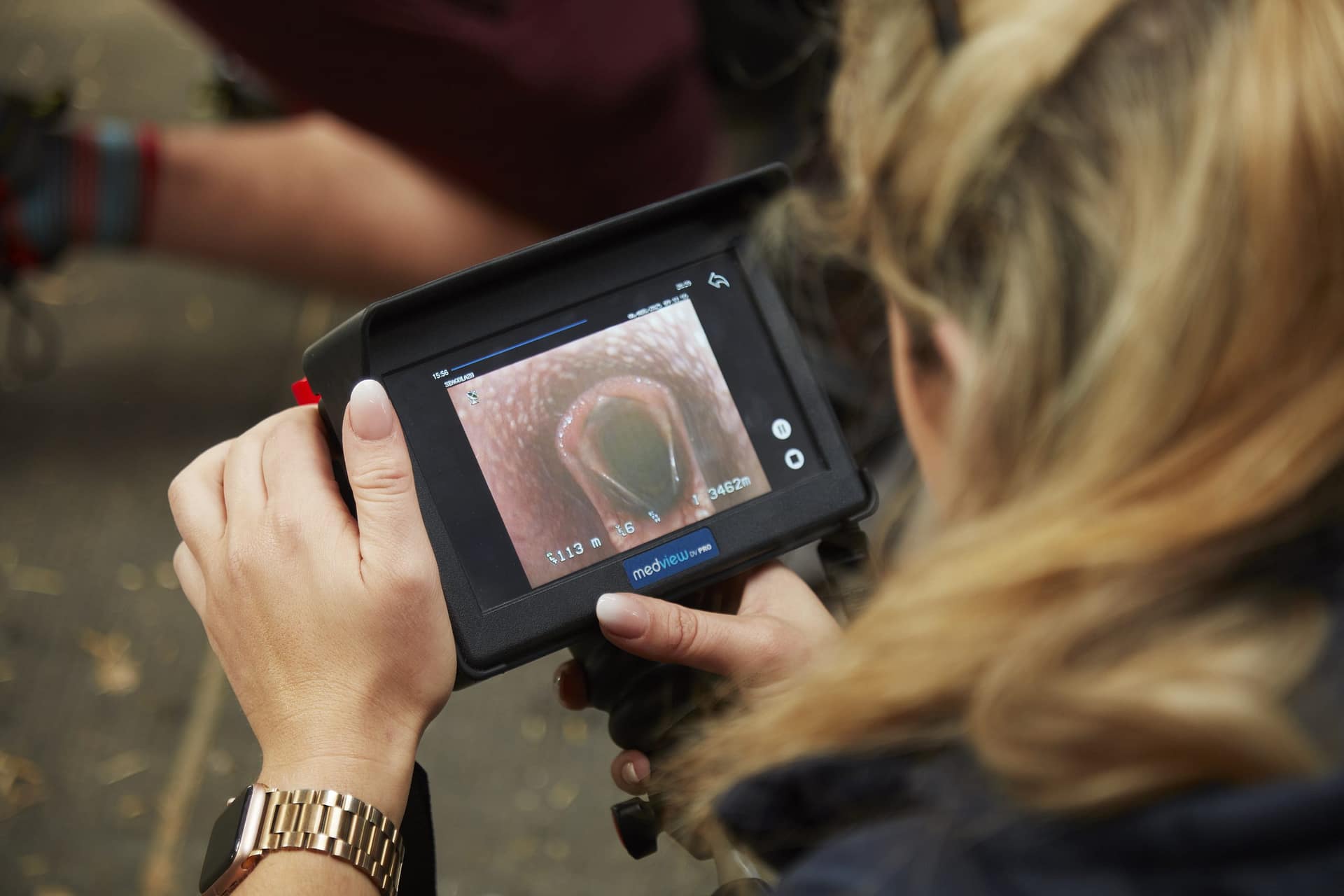
The MEDView Dynamic system is the only overground scope to have in-built GPS software, which allows characterization of pathology at specific altitudes, velocities and distances. This is particularly useful for examining horses that have reports of making a noise after a certain distance travelled or during faster work as the GPS data is visible on the live remote viewer as well as the recorded capture data.
This ensures that the horse has been worked hard enough during the endoscopic examination to visualise pathology if such a history exists. I really like this new feature as someone who has not watched a lot of overground endoscope data as it makes it much easier to locate the exercising portion of the recorded data than on recorded data without the GPS due to the change in velocity visible on the recorded data
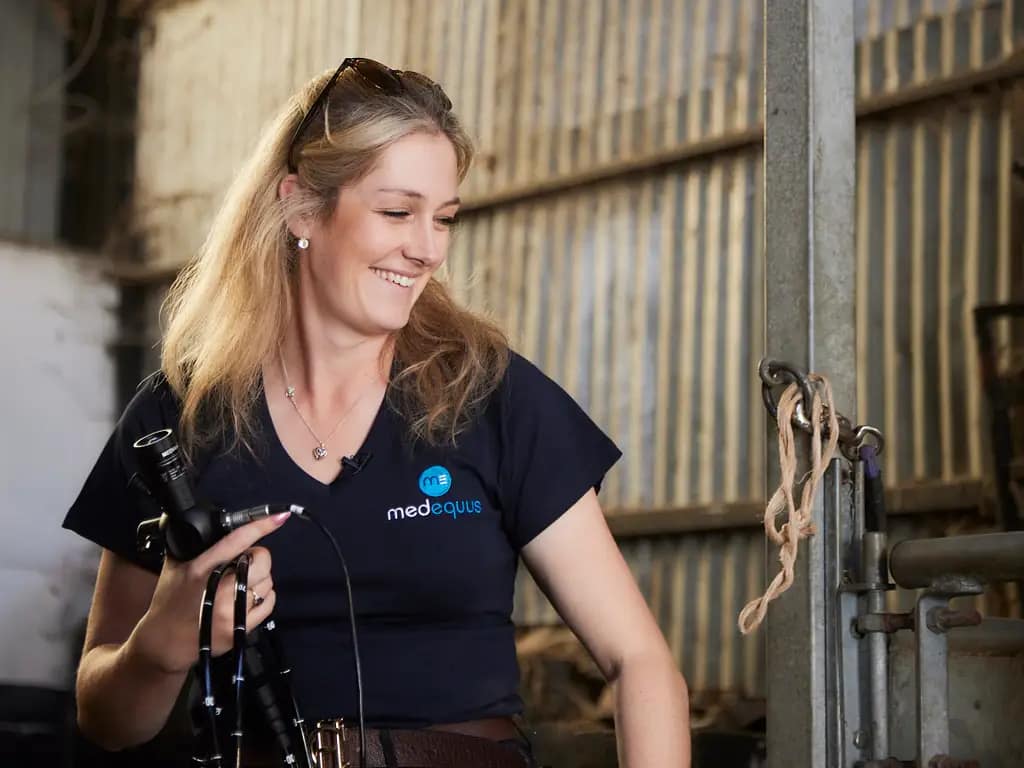
“The most versatile overground endoscope system available on the market”
The delayed start feature is another of the new upgrades available on the Dynamic scope system; this allows the beginning of the recording to be delayed in five-minute increments up to a total of 20 minutes. This significantly reduces the total size of the capture recording, meaning quicker saving of the recording after examination, as well as easier transfer and storage of the recorded files. It is a particularly useful feature if there is an extended walking period down to the gallops or track, and appears in the top left hand corner on the capture as a countdown to the beginning of the recording.

We also trialled a new style remote viewing monitor while at Manor House.
This monitor can be used in conjunction with pre-existing iHUB viewing platforms or can be used independently as the sole remote viewer. The MEDView Dynamic viewing monitor has dual antennas meaning it can receive a more stable live feed from a greater distance.
At Manor House, we could confidently visualise the live feed from 7 furlongs away from the horse, however this will vary at each location dependent on external radio frequency factors. The GPS data can be visualised on both the iHUB and Dynamic viewing monitor.
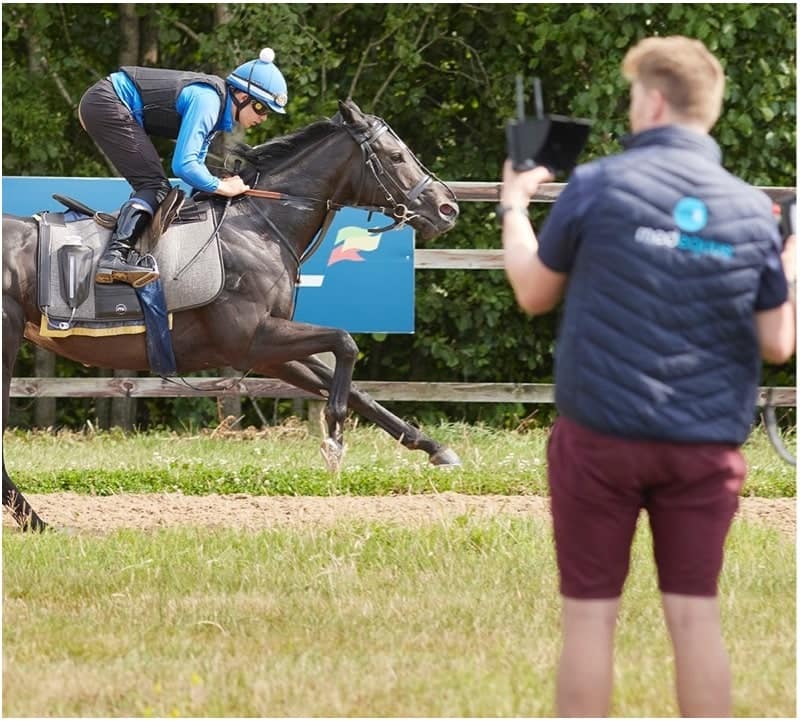
This new viewing monitor alongside our 3 existing interchangeable pads (ridden, Western and trotting) allows us to create bespoke packages specifically tailored to each veterinarians needs. Add this to the fact that the dynamic scope is the narrowest on the market at 9mm, is non-head mounted and has a working adjustable length of 70cm within the semi-flex distal section, it is the most versatile overground endoscope system available on the market.
August also brought me the opportunity to hop over to the Emerald Isle to provide some additional after-sales training and support to some long-standing Irish clients. This is one of the parts of my role as Lead Equine Vet that I enjoy the most as I have always enjoyed education whether that be passing on knowledge to vet students or clients, or through gaining knowledge during CPD events or shadowing other vets. I also love the variety that this provides, especially now through telemedicine, as it means I get to meet and train vets from all over the world.
This trip gave me the opportunity to further test the new Dynamic system features, and we got some great footage of laryngeal pathology with GPS data in both racing and showjumping horses.
The delayed start feature was particularly useful for those racing horses that had extended walks to the gallops, especially to limit data size and decrease the time for videos to save to the capture
It was great to spend some time with vets and nurses that had been using the dynamic system since its launch around 18 months ago; these discussions are where new ideas are floated to bolster and improve our products, as both vets and nurses have a great way of seeing things from a different perspective. They also know what is really critical to a product, and what is just window dressing. As already stated, we at MED Equus thrive on continuous development of our products, and we plan to see the latest versions of our endoscopes launching in the near future.
The main points from the training was the critical importance of tack and scope position. Initially, when the MEDView Dynamic system launched, our advice was to have the noseband of the provided bridle at a similar tightness to a normal bridle noseband (2 fingers easily passed between the noseband and nose). However, we would now advise, especially in particularly hot and humid climates, to tighten the noseband more than a normal noseband. This stops the sideways twisting movement of the noseband, which worsens significantly if the horse is sweating, leading to a vast improvement in video quality. Subsequent to this, we have decreased the length of our nosebands, and more holes can be added to existing nose bands using a leather hole-punch should they be required.
It goes without saying that scope position is also critical to obtaining a diagnostic video- traditionally external measurement of the scope using the lateral canthus or mid point of the jaw has been recommended to ascertain the length of scope to be inserted. This tends to result in around 35-40cm of the distal end of the dynamic scope inserted in most Thoroughbreds, but will be less in sports ponies and usually more in sports horses and large carriage horses. Using the lateral canthus of the eye or mid jaw commonly results in the distal end of the scope being positioned rostral to the epiglottis, with good visualization of the rest of the laryngeal structures and soft palate. The length of the inserted portion can be adjusted to achieve optimal position.
Recommended positions:
Racehorses largely will have an extended head position when exercising at maximal effort and so distal scope position of 1cm rostral to the epiglottis commonly gives diagnostic video quality.
However, in dressage or showjumping horses worked in an outline, a distal scope position of 1cm rostral to the epiglottis would result in the final scope position being too caudal to be diagnostic in some cases once a contact and outline are achieved.
For this reason, we would always recommend taking into consideration the exercising head position of the horse, and moving the head into that position during placement of the scope, to ensure optimal scope placement.
Thank you for reading the second instalment! – Dr Lucy Rudd